Ljubljana, Lake Bled and slow travel in Central Europe
A small capital on a green river, a lake beneath the Alps, and long trails that cross borders on foot.
Some cities overwhelm; Ljubljana charms. The capital of Slovenia is small enough to walk across in an afternoon, green enough to feel like a garden, and lively enough to keep you for days. It is also a perfect base for slow travel into the Alps and beyond.
A city on a river
Wikipedia's article on Ljubljana traces the city from a Roman settlement called Emona, through centuries as the historical capital of Carniola under Habsburg rule, to its role today as Slovenia's capital. It also records a UNESCO World Heritage listing for the works of the architect who reshaped the city in the twentieth century, described in the listing as human-centered urban design.
That design is what makes the city so pleasant to explore. The river curves through the old town, lined with willows, cafés and terraces, and crossed by a series of distinctive bridges. Riverside promenades, market colonnades, stairways and small squares knit the center together, with the castle watching from its hill above. Much of the old center is given over to people on foot, which makes strolling and lingering easy.
- Walk the riverbanks in the morning and again in the evening, when the terraces fill.
- Visit the central market for local produce, cheese and flowers.
- Climb to the castle for views of red roofs and, on clear days, the Alps.
- Explore the parks, which bring green space right up to the city center.
Street art
Ljubljana has a lively street-art scene, with murals, paste-ups and painted walls in several districts, and an alternative cultural quarter where art covers nearly every surface. Wandering in search of it takes you beyond the polished old town into more everyday neighborhoods. Look, photograph respectfully, and remember that these are working and living spaces.
Lake Bled
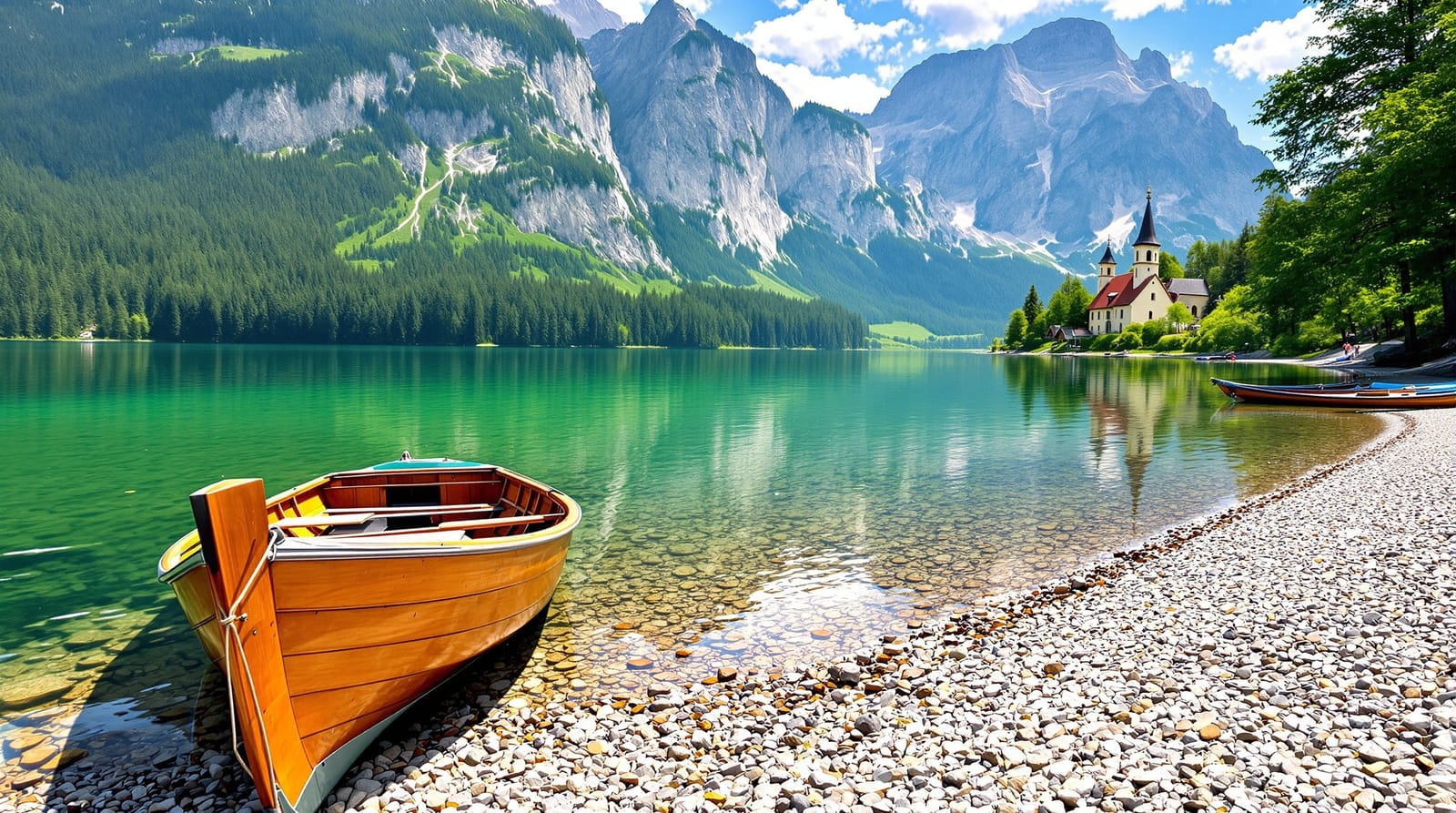
A short journey from the capital, Lake Bled is one of the most famous views in Central Europe: a green-blue alpine lake with a small island and church, a castle on a cliff, and mountains behind. A path circles the lake and makes a lovely walk at any time of day. Traditional wooden boats carry visitors to the island, and quieter viewpoints on the hills above reward a short climb. Visit early or late to avoid the busiest hours, and consider staying overnight to see the lake in the calm of evening and early morning.
Beyond Bled, the Julian Alps and their national park offer high meadows, gorges, waterfalls and emerald rivers, and quieter lakes that are as beautiful as the famous one.
Long-distance walking across the Alps
One of the joys of this region is that you can walk across borders. Long-distance trails link Austria, Slovenia and Italy through mountains, valleys, villages and lakes, divided into daily stages with overnight stops in guesthouses and mountain huts. Walking such a trail, you notice how landscapes, languages, food and architecture shift gradually as you go, rather than changing abruptly at a line on the map.
- Choose stages that match your fitness, and allow rest days.
- Book accommodation where needed in busy seasons.
- Carry layers, rain gear and a map; mountain weather changes quickly.
- Use local buses and trains to skip stages or return to your starting point.
Slow travel like this, on foot and by rail, is described more fully in Lausanne and Switzerland by rail and the general train travel tips.
Kraków in brief
Farther north, in Poland, Kraków has one of Europe's most beautiful old towns: a vast market square, churches, a royal castle on a hill above the river, and a historic Jewish quarter now full of cafés and galleries. The old town rewards slow wandering and evenings in its squares.
Bulgaria's monasteries in brief
To the southeast, Bulgaria's mountains shelter old Orthodox monasteries, their walls and ceilings painted with bright frescoes, their courtyards quiet and green. Visiting them is a lesson in art, faith and history. Dress modestly, keep voices low, ask before photographing, and follow the rules of each monastery.
The pleasures of slow travel
Central Europe is ideally suited to slow travel: compact countries, good public transport, walkable towns and long trails. Stay longer in fewer places, walk between them when you can, and let the landscape change gradually. For more on returning to Europe's cities, read revisiting London, and for noticing everyday culture along the way, What defines a culture?.