Packing smart: what to bring, what to leave and getting through the airport
A lighter bag, a calmer airport day and a sarong that does ten jobs.
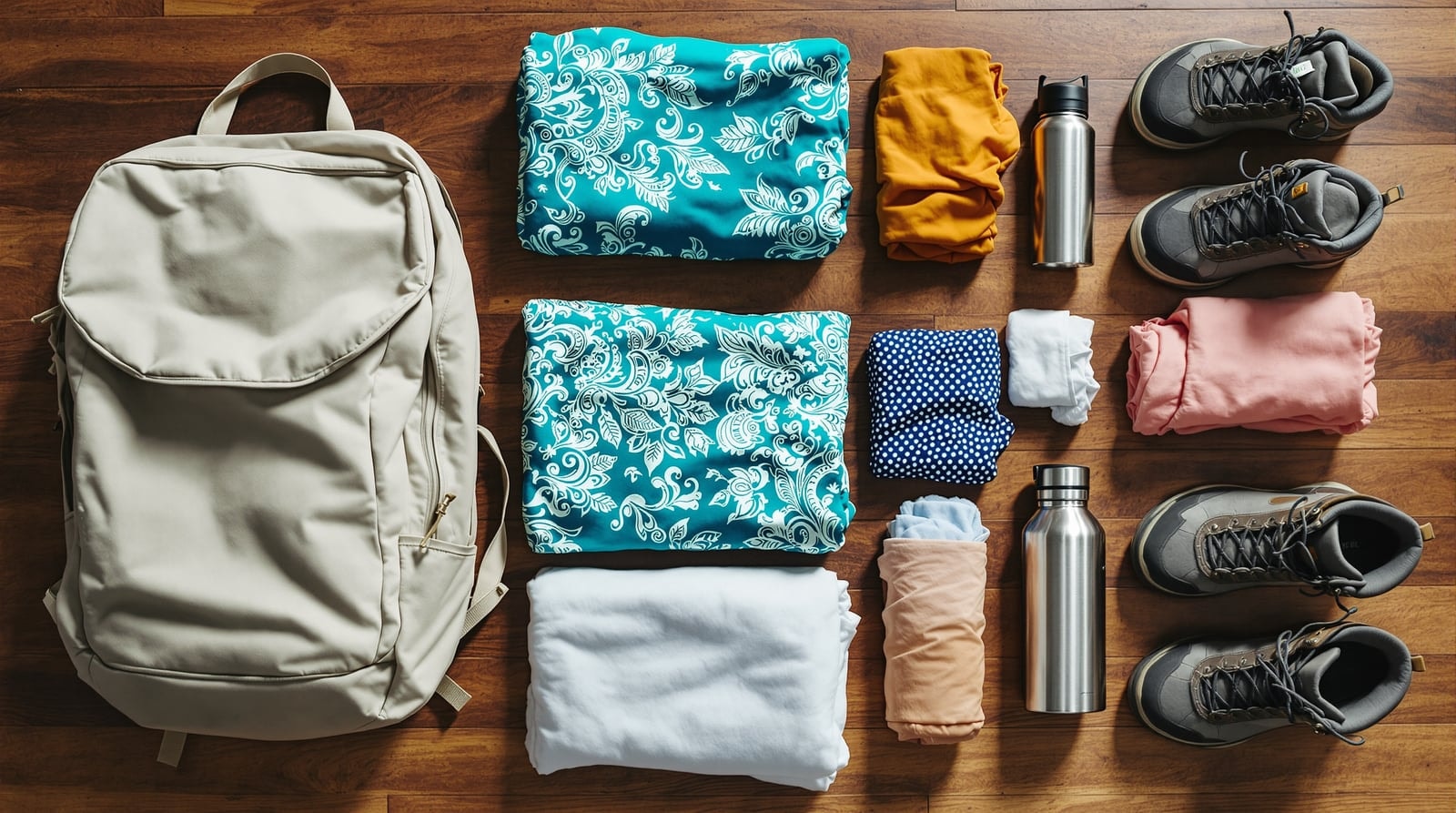
Almost every experienced traveler says the same thing: pack less. A lighter bag makes stairs, buses, trains and cobblestones easier, keeps you flexible, and frees your mind for the trip itself. The trick is knowing what to leave behind.
Start with a list
A written packing list saves you from both forgetting essentials and overpacking out of anxiety. Build a basic list once, then adapt it for each trip according to climate, activities and length. After each journey, note what you never used and what you missed. Over a few trips, your list becomes a finely tuned tool.
- Documents and money: passport or ID, copies stored separately, cards, some local currency.
- Clothes: planned as a small wardrobe that mixes and matches.
- Toiletries: travel sizes, only what you really use.
- Electronics: phone, chargers, adapter, perhaps a small power bank.
- Health: a small first-aid pouch and anything you personally need.
- Comfort: a light scarf or sarong, earplugs, an eye mask, a reusable water bottle.
Layering
Rather than packing bulky clothes for every possible temperature, pack thin layers you can combine: a base layer, a light warm middle layer, and a windproof or waterproof outer shell. Together they handle cool mornings, air-conditioned buses, windy decks and sudden showers. Choose colors that go together so that every top works with every bottom.
The humble sarong
Wikipedia's article on the sarong describes it as a large tube or length of fabric, often wrapped around the waist, worn across Southeast Asia, South Asia, parts of Africa and many Pacific islands, and often brightly colored by batik or ikat dyeing. For a traveler, a simple length of fabric like this is one of the most useful things you can carry:
- a skirt or wrap for beaches and pools;
- a cover for shoulders or legs when visiting sacred places;
- a light blanket on planes, trains and buses;
- a towel, a picnic cloth, a sunshade or a pillow cover;
- a privacy curtain in a shared sleeping compartment;
- a scarf against wind or dust.
A small first-aid pouch
Keep a small, simple pouch with basic supplies such as adhesive bandages, blister care, antiseptic wipes, a small pair of scissors or tweezers, and any personal items you use regularly. Keep anything you depend on in your hand luggage. For advice on what you personally should carry for a particular destination, speak with a health care provider before you travel.
Buying good used gear
Travel gear does not have to be new. Secondhand sales, whether a neighbor's garage sale or an outdoor-gear co-op's member sale of returned and used equipment, can turn up excellent backpacks, jackets, tents and boots. Wikipedia's article on garage sales describes them as informal events for the sale of used goods by private individuals, typically offering items that are still usable, including clothing and sports equipment. A few tips:
- Arrive early for the best selection, but respect the stated start time.
- Inspect zips, seams, buckles and soles carefully.
- Know what the item costs new, so you can judge whether it is a good deal.
- Try packs on with some weight inside; fit matters more than brand.
Weigh your bag
Once packed, weigh your bag and try carrying it up and down stairs and for a few minutes around the block. If it feels heavy now, it will feel much heavier at the end of a long day. Take things out until it feels comfortable. Luggage size and weight rules vary between carriers and change over time, so check the current rules for your specific journey before you pack.
Airport days
Airports reward preparation and calm.
- Check what you can carry. In the United States, the TSA provides an online item lookup tool that lets you look up items for carry-on and checked baggage; check it before you pack rather than at the checkpoint. Other countries have their own official guidance.
- Keep liquids, electronics and documents easy to reach so screening is quick.
- Arrive with time to spare, especially for international departures.
- Wear comfortable shoes and layers; terminals and planes vary in temperature.
Layovers and cancellations, handled calmly
Delays and cancellations happen to everyone eventually. Handling them calmly is a skill.
- Keep essentials, including a change of clothes and anything you rely on daily, in your carry-on in case you are separated from checked bags.
- Keep booking details and contact information easily accessible.
- If a flight is cancelled, join the queue and contact the carrier by phone or app at the same time.
- Know your rights, which vary by country and carrier, and ask politely but firmly for what you are entitled to.
- On a long layover, find a quiet corner, stay hydrated, stretch, and see if there is a safe way to explore.
Long journeys across time zones bring their own challenges; see jet lag and your body clock. For packing on a rail journey, the train travel tips have more, and for a first voyage, tips for your first cruise.