Traveling in Vietnam — and a first taste of Seoul
A long, narrow country of rice terraces, limestone bays and lantern-lit towns, with a short hop north to South Korea.
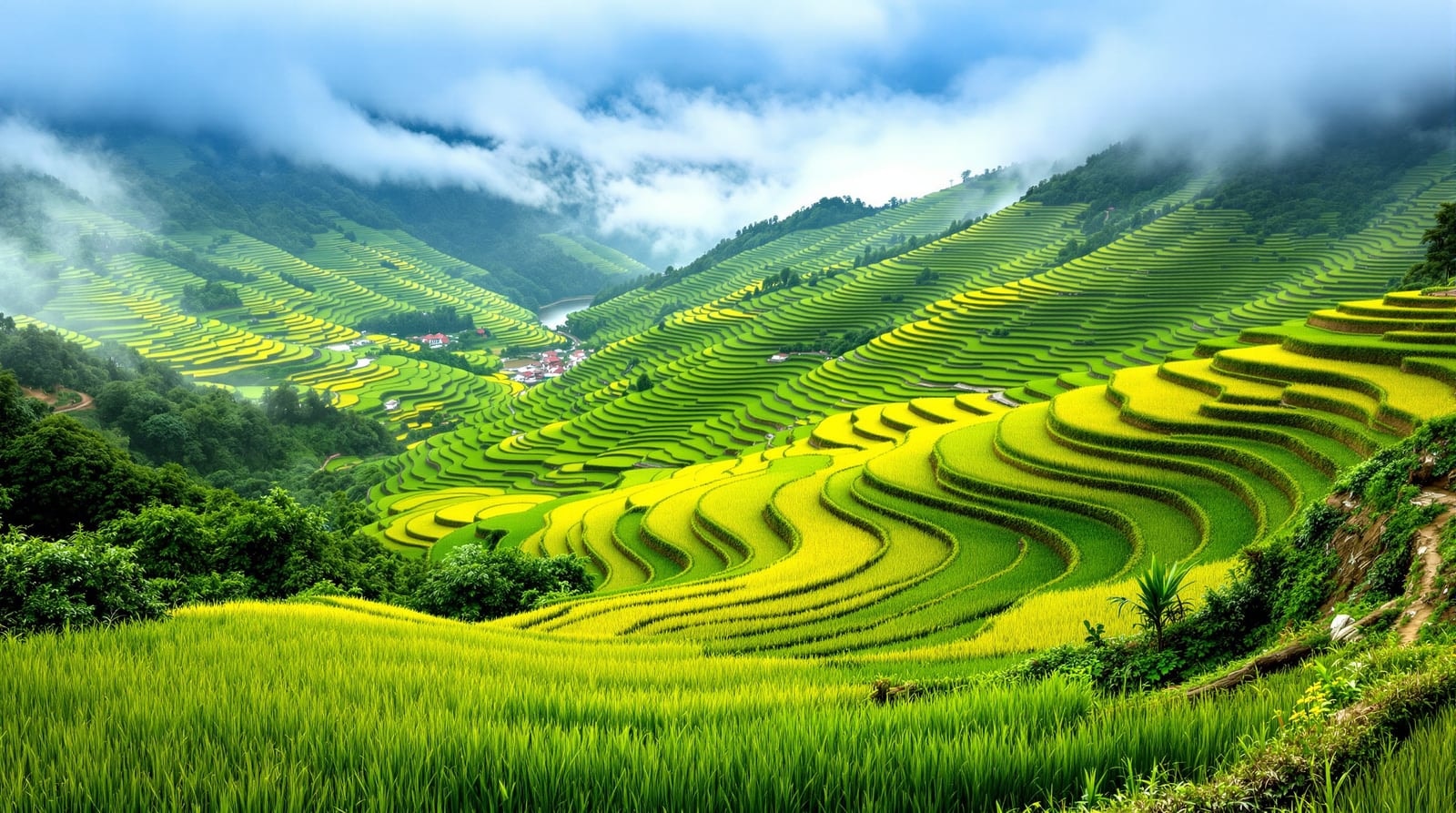
Vietnam stretches in a long S-curve down the eastern edge of mainland Southeast Asia, from misty northern mountains to the flat, watery south. Traveling its length is a journey through changing climates, cuisines and landscapes, and it is one of the most rewarding routes in Asia for independent travelers.
The shape of the country
Wikipedia's article on Vietnam describes a country at the eastern edge of mainland Southeast Asia, bordered by China to the north and by Laos and Cambodia to the west. It traces early states to the Red River Delta in the north, and a long history in which successive dynasties absorbed influences from Confucianism and Buddhism. Most journeys follow the country's natural spine, between the capital in the north and the largest city in the south, with the central coast in between.
The north: Hanoi and beyond
Hanoi is a city of lakes, tree-lined boulevards and an old quarter of narrow streets, each once devoted to a single trade. Early morning is the time to see it: people exercising around the lakes, street vendors setting up, the smell of broth and coffee in the air. Walk slowly, cross the traffic calmly and steadily, and let the city's rhythm carry you.
North and west of the capital, mountain regions of rice terraces and forested hills are home to many ethnic minority communities. Trekking here is best done with local guides who can arrange respectful visits and homestays.
Hạ Long Bay
East of Hanoi, countless limestone islands and pillars rise from the green water of Hạ Long Bay, one of the most famous seascapes in Asia. Boat trips of many kinds cruise among the islands, stopping at caves, floating villages and quiet coves. Choose operators carefully, look for those who manage waste responsibly, and consider exploring quieter neighboring bays as well.
The center: Hội An and the coast
Halfway down the country, the old town of Hội An was once a busy international trading port. Wikipedia's Vietnam article notes that Portuguese traders were active in Hội An's trade in the sixteenth and seventeenth centuries. The old town today is known for its wooden merchant houses, assembly halls and a covered bridge along the river. In the evening, silk lanterns glow along the streets and on the water. Stay a few days, rent a bicycle, and ride out through rice fields to the beach.
The central coast also offers imperial history, long beaches and mountain passes with sweeping views over the sea.
The south: the big city and the Mekong
The southern metropolis is fast, modern and full of energy, with markets, street food and a mix of old and new architecture. South of it, the Mekong Delta is a vast green maze of rivers, canals, orchards and rice paddies. Boat journeys through the delta pass floating markets and villages on stilts, and staying a night or two in a small riverside guesthouse shows the slower rhythm of delta life.
Street food
Vietnamese food alone is reason enough to go. Noodle soups eaten on low plastic stools, crisp rice pancakes, fresh spring rolls, grilled pork with rice noodles, baguette sandwiches, and bowls of herbs on every table make every meal an adventure.
- Eat where the stools are full of local diners; turnover means freshness.
- Try regional specialities in each place; dishes change from north to south.
- Learn a few words, such as hello and thank you, and point politely at what others are eating.
Getting around
Trains run the length of the country and make a scenic way to travel, especially along the central coast; overnight sleepers are part of the experience. Buses and domestic flights fill the gaps. In cities, walking, taxis and ride services are easiest. The general train travel tips apply well here.
Entry requirements for Vietnam change and depend on your nationality, so check the official guidance of your own government and of Vietnam well before you travel.
A first taste of Seoul and South Korea
A flight north brings you to a very different Asian capital. Seoul is a vast, efficient city of glass towers, palaces and traditional wooden-house neighborhoods, framed by mountains that rise right inside the city limits. Its subway is easy to use, its markets are lively day and night, and its food, from grilled meats cooked at the table to fermented vegetables and warming stews, is a world of its own.
- Visit the old palaces for their painted gates, courtyards and gardens.
- Hike a city mountain; trails start from subway stations and reward you with views over the whole city.
- Explore traditional neighborhoods quietly and respectfully, remembering that people live there.
- Venture beyond the capital by fast train to historic towns, temples in the mountains and the coast.
Long flights between these regions cross several time zones; the page on jet lag and your body clock is worth reading before you go. For the lanterns and old towns of other cultures, the essay What defines a culture? offers a way to think about them.