The animals of Iceland: puffins, horses, sheep and seabirds
On an island of lava and ice, the animals are few, hardy and unforgettable.
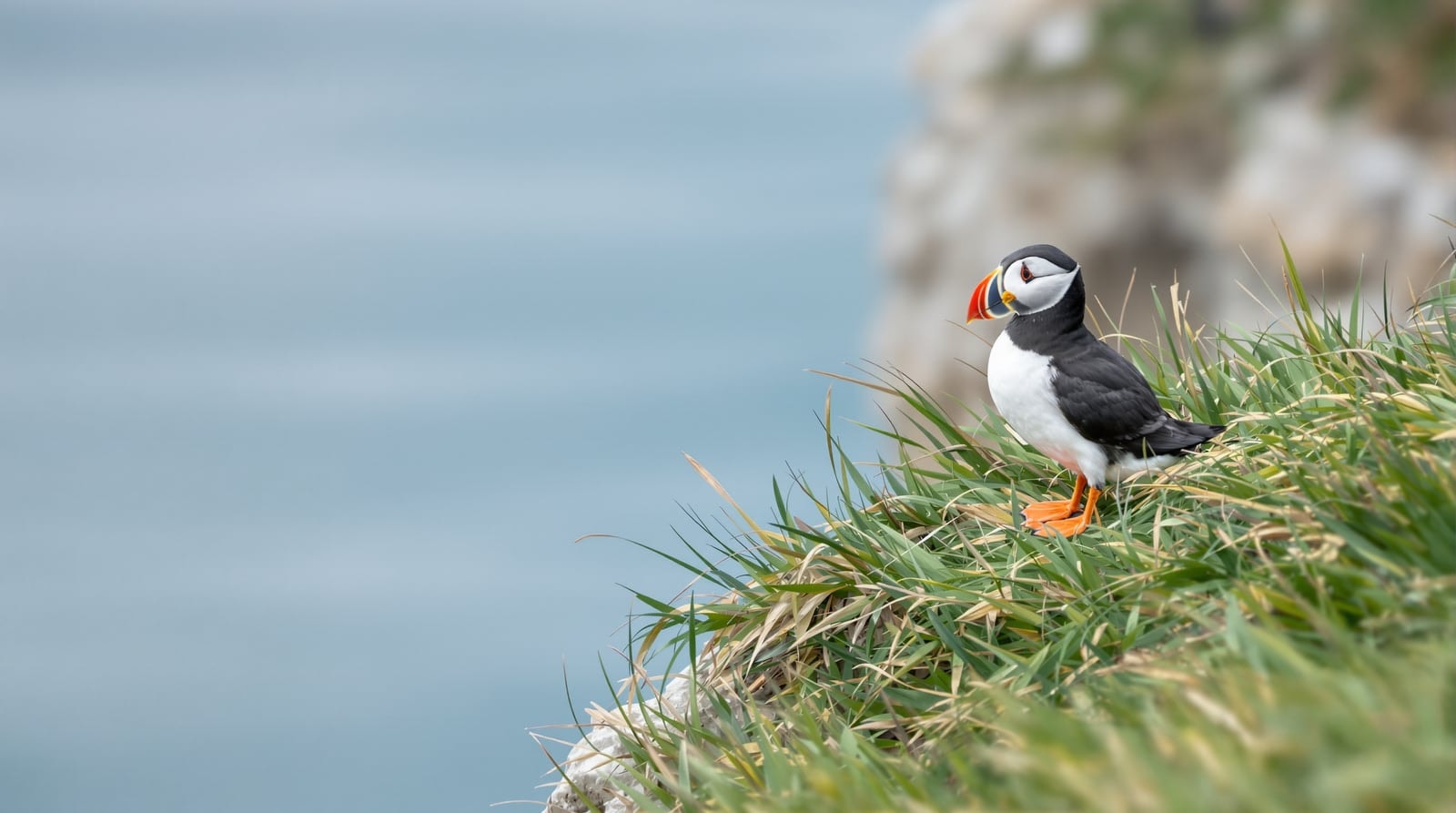
Iceland is young land, raised from the sea by volcanoes and scraped by glaciers, and it has relatively few land animals. What it has instead are enormous seabird colonies, a breed of horse found nowhere else in quite the same form, and sheep that roam the highlands all summer. For many visitors the animals end up among the strongest memories of the trip.
The island and its creatures
Wikipedia's article on Iceland describes a Nordic island country between the Arctic Ocean and the North Atlantic, sitting on the Mid-Atlantic Ridge between Europe and North America, and notes that farming in its early centuries was predominantly pastoral, based on livestock such as sheep, cattle and horses. That pastoral heritage is still visible everywhere: in the horses grazing beside the ring road, the sheep dotting the hillsides, and the farms tucked into fjords.
The Atlantic puffin
With its black-and-white body and striped, brightly colored bill, the puffin is Iceland's most beloved bird. Wikipedia's article on the Atlantic puffin explains that it spends the autumn and winter out on the open ocean, returns to coastal areas at the start of the breeding season in late spring, and nests in clifftop colonies, digging a burrow in which a single egg is laid. The same article notes that the bird loses some of its bright facial coloring at sea in winter, with the color returning in spring.
So the time to see puffins in Iceland is the breeding season, from late spring through summer, when grassy cliff tops and offshore islands fill with birds coming and going from their burrows with beaks full of small fish. Colonies can be seen along much of the coast, and boat trips visit islands where they nest.
Watching puffins well
- Keep your distance. Burrows honeycomb the turf at the cliff edge; walking over them can collapse a nest. Stay on paths and behind any ropes or markers.
- Stay back from the edge. Grassy cliff tops can be undercut and slippery. A long lens is a better tool than a risky step forward.
- Sit still. Puffins that are left alone soon go about their business nearby. Patience earns closer views than approaching ever will.
- Never feed or handle birds, including young birds found away from the colony.
The Icelandic horse
Iceland's horses are small, sturdy and thick-maned, bred over centuries on the island in isolation. They are often mistaken for ponies, but Icelanders call them horses, and they are known for their calm temperament and for special gaits in addition to the familiar walk, trot and canter. In winter they grow shaggy coats; in summer they gather in herds in open pastures, manes blowing in the wind.
Seeing them is easy along country roads. Admire them from the roadside, pull over only where it is safe to do so, and remember that they are farm animals on private land. Do not climb fences or offer food.
Sheep and the autumn round-up
For much of the summer, sheep graze freely across the highlands and valleys, often wandering onto roads. Drive with care: a lamb on one side of the road and its mother on the other is a warning to slow right down.
In autumn, communities gather the sheep from the mountains in a traditional round-up. Riders and walkers sweep the hills and drive the flocks down to stone sorting pens, where each farmer claims their animals by their markings. It is a working event with a festive side, a strong expression of rural life that has continued for many generations. If you are traveling in the countryside at that time of year, you may see the flocks coming down.
Seabirds and the cliffs
Beyond puffins, Iceland's coastal cliffs host huge colonies of guillemots, razorbills, kittiwakes, fulmars and gannets, while Arctic terns nest on open ground and dive fiercely at anyone who comes too close. Ducks and swans crowd the lakes, and in the far north and west you may be lucky enough to see an eagle. Whales and seals are part of the coastal scene too, best seen with operators who follow responsible viewing practice.
A few principles for all wildlife
- Give animals space, and let them decide how close to come.
- Keep to paths and follow local signs, especially in nesting season.
- Drive slowly in the countryside, and never stop on a blind bend to look at animals.
- Leave nothing behind and take nothing away.
Weather changes quickly in Iceland, even in summer, so pack warm, waterproof layers for any clifftop walk. For the island's steaming landscapes and town swimming pools, read Iceland's hot pools and geothermal landscapes, and for its quiet churchyards see visiting historic cemeteries on your travels.