Traveling by train: tips for long rides and overnight journeys
The window seat, the dining car and the slow unrolling of a country: how to make the most of a long rail journey.
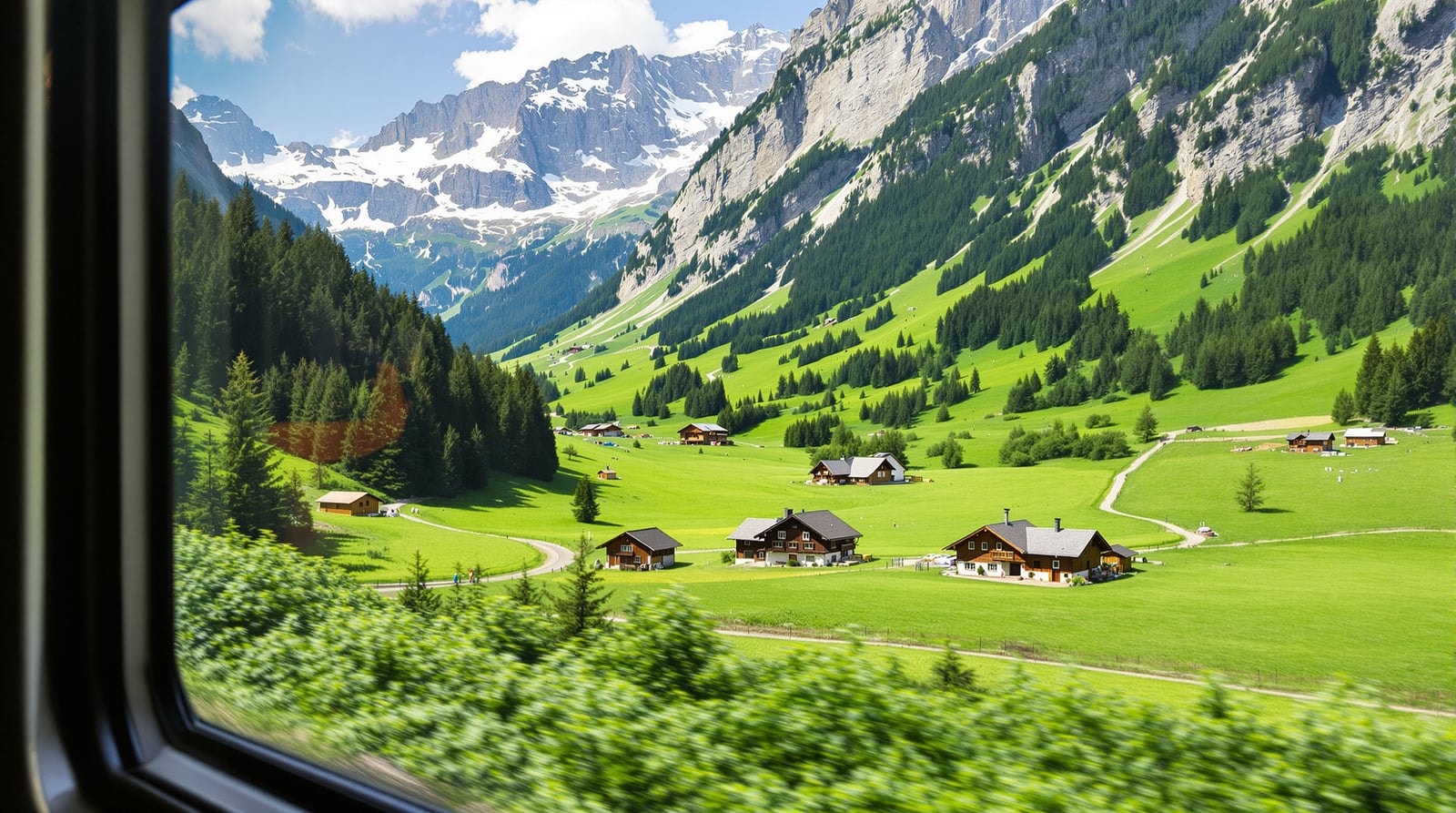
A train does something no plane can: it lets a country arrive gradually. Suburbs thin into farmland, farmland climbs into hills, a river appears beside the track and stays for an hour. Long rail journeys reward a little planning, and they reward patience even more. These are the habits that make a day or a night on the rails comfortable.
Choosing where to sit
On a long daytime ride, your seat is your home, so it is worth choosing with care where the booking system allows it.
- Pick a side. On scenic routes one side of the train often has the better view: the coast, the river, the mountain wall. A quick look at a map of the route will usually tell you which.
- Face forward if you are prone to motion sickness, and sit near the middle of a carriage, where the ride is smoothest.
- Consider the quiet car if the route offers one, especially on busy commuter corridors.
- Stay near your luggage. A seat within sight of the rack spares you a lot of glancing over your shoulder.
Berths and overnight trains
Sleeper trains come in many forms, from reclining seats to shared couchettes to private compartments. A shared couchette is a sociable, affordable option; a private compartment buys quiet and space to spread out. Whichever you choose, lower berths are easier to get in and out of, while upper berths feel more private and keep your things out of the way.
Sleeping well on a moving train takes a little preparation. Earplugs soften the rhythm of the rails and the noise of stations, an eye mask blocks platform lights at night, and a light layer handles the swing between an overheated carriage and a cold morning. If you are crossing time zones by rail, the guide to jet lag and the body clock has ideas that apply just as well on a long overland trip.
Packing a day bag
Put your main luggage on the rack and keep a small bag at your seat with everything you will want before the next stop:
- water and a few snacks;
- a warm layer and a scarf, since air conditioning can be fierce;
- documents, tickets and any passes, kept together;
- a book, headphones and a charger, remembering that sockets are not guaranteed;
- a small wash kit for overnight journeys.
The page on packing smart covers the rest of the bag, including the humble sarong, which doubles as a blanket, a pillow cover and a privacy curtain on a train.
Food and water
Some trains have a dining car worth planning a meal around; others have a trolley or nothing at all. It is wise to board with water and something to eat regardless. On many routes, station stops are short, so do not count on leaving the train to buy food unless you are sure of the timing. On longer journeys, a picnic of bread, cheese, fruit and whatever the local markets sell becomes part of the pleasure of the trip.
Rail passes
A rail pass lets you take a set number of journeys, or travel freely within a period, across a country or region. Passes can suit travelers who plan to move often and want flexibility; point-to-point tickets often suit those taking only a few long trips. The terms, seat-reservation rules and exclusions vary widely, so compare the pass against the individual fares for your actual route before buying, and check whether popular trains need a reservation on top of the pass.
Scenic lines and integrated networks
Some countries treat the railway as the backbone of travel. Switzerland is the classic example; Wikipedia's article on Switzerland's national railway describes an operator that has invested in the reliability and quality of service of its conventional network, and notes that the country has the densest network of semi-fast long-distance trains. In a system like that, trains, buses, boats and mountain railways connect so neatly that a car becomes unnecessary. The guide to Lausanne, Lake Geneva and Switzerland by rail shows how that works in practice.
Elsewhere, scenic lines climb over mountain passes, trace coastlines or cross deserts where no road follows. They are worth seeking out even when they are slower than the alternative, because the view is the destination.
Heritage railways and trolleys
Not every rail journey needs to cross a continent. Heritage railways, often run with old locomotives and carriages on historic lines, turn a short ride into an afternoon of history. City trolleys and streetcars are the cheapest sightseeing tour in many places, rattling past markets and monuments at walking pace. In mining country in the American West, historic narrow-gauge lines still climb through the hills; the page on Nevada beyond Las Vegas touches on that history.
Small courtesies
- Keep bags off seats on busy trains.
- Take phone calls in the vestibule, not at your seat.
- In shared compartments, agree on lights-out and window settings early.
- Greet your neighbors; a long train ride is one of the last places strangers still talk.
The best advice for rail travel is simply to leave time. A train that runs late is an inconvenience on a tight schedule and an extra hour of scenery on a loose one.