Huatulco and Mexico's Pacific coast
Quiet bays, dry forest and the flavors of Oaxaca, with a detour to the deserts and whale lagoons of Baja.
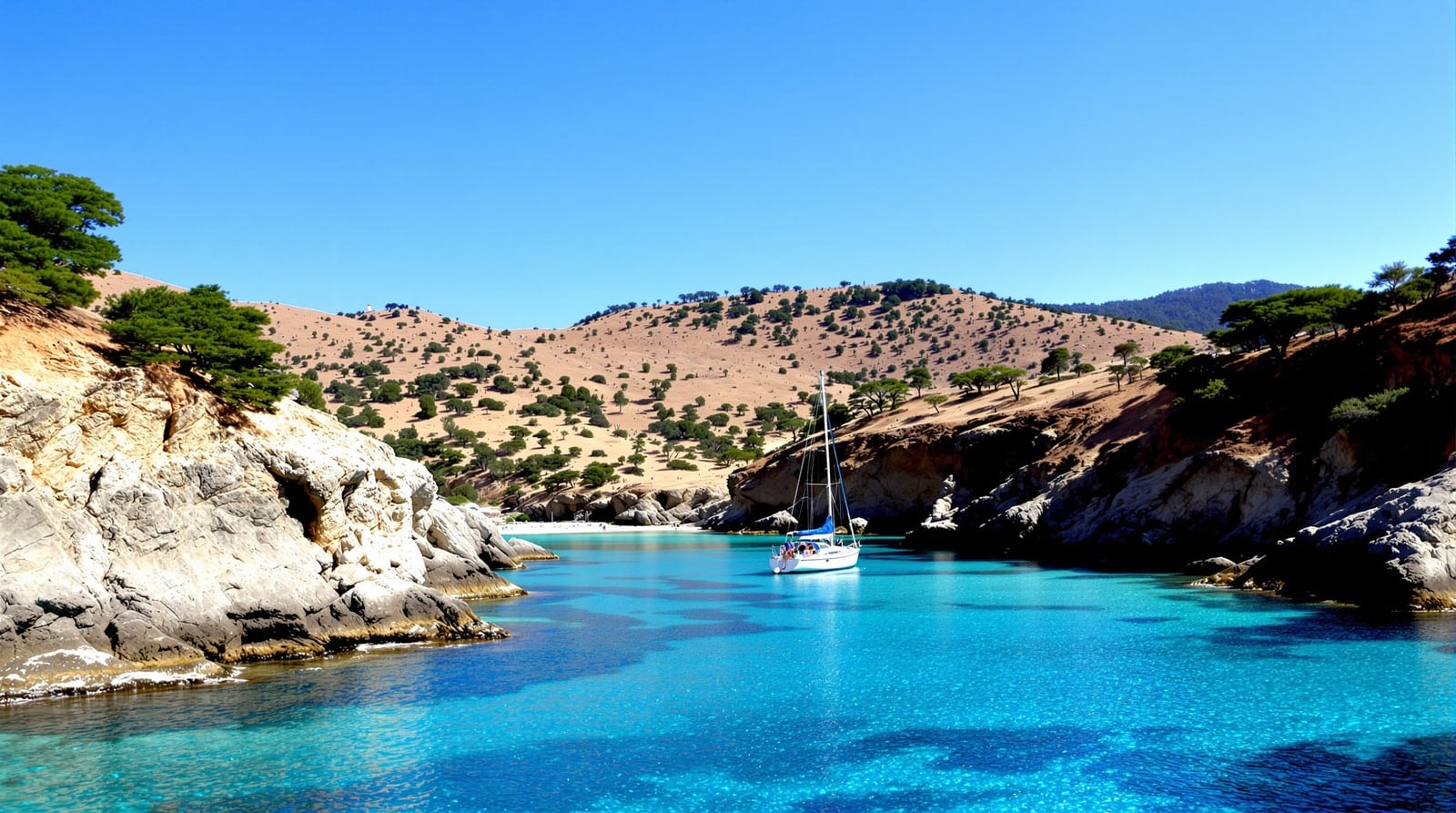
Mexico's Pacific coast is long, and much of it is far from the crowds. In the state of Oaxaca, where mountains come down to meet the ocean, a string of bays offers clear water, rocky headlands and a gentler pace than the big resort cities. This is Huatulco.
A coast of bays
Wikipedia's article on Huatulco describes it as a tourist development on the Pacific coast of Oaxaca, centered on its nine bays, and places it where the foothills of the Sierra Madre del Sur meet the ocean. That geography shapes everything. Each bay is its own small world: some have a village and fishing boats, others only a strip of sand between cliffs, reachable by a rough track or from the water.
Behind the coast, the land is covered in tropical dry forest, grey and leafless in the dry season and startlingly green after the rains. Part of the area is protected as a national park, which keeps stretches of shore and forest wild.
Sailing and swimming in the bays
The best way to understand Huatulco is from the water. Boat trips of every kind, from small fishing launches to catamarans, hop from bay to bay, stopping to swim or snorkel over rocks and coral. A day on the water shows how varied the coastline is: pale sand in one cove, dark rock in the next, a lone palm on a headland.
- Choose a trip that stops at less-visited bays, not only the busiest beaches.
- Snorkel with care: never stand on coral or touch it, and keep fins well clear of the reef. The page on greener travel explains why reefs are so fragile.
- Pay attention to currents and to the advice of local boat crews about where it is safe to swim.
- Protect yourself from the sun on deck, where reflected light doubles the glare.
Birds and flowers
The dry forest and the coast are rich in birds. Frigatebirds hang over the headlands, pelicans dive in the bays, and herons stalk the river mouths. Inland, parrots and orioles bring color to the trees. Early morning is the time to look and listen, before the heat settles. In season, flowering trees turn whole hillsides pink, yellow or white, and bougainvillea spills over walls in town.
A taste of Oaxaca
Oaxaca's food is one of the great regional cuisines of Mexico, and even on the coast you will find it. Look for the complex sauces known as moles, each with its own color and character; the large, crisp tortillas topped with beans, cheese and meat; the local string cheese; chocolate ground with spices and drunk hot; and coastal dishes of fresh fish and shrimp. Markets are the place to taste widely and cheaply, and to see the region's produce, from chiles to tropical fruit.
Getting around
Huatulco is spread out, with the town and the bays linked by roads that wind over the headlands. Taxis and local buses connect the main areas, and boats reach the more remote beaches. Distances are short on the map but slower on the ground, so group your days by area rather than crisscrossing the coast.
Onward: Baja California Sur in brief
Far to the northwest, across the Gulf of California, the long peninsula of Baja offers a completely different Mexican Pacific. Baja California Sur, its southern half, is desert meeting sea: cactus plains, red mountains and water in shades of blue that look unreal.
Loreto
A small, historic town on the gulf side, Loreto looks out on islands and a protected marine area. It is a base for kayaking, snorkeling and quiet walks along the malecón.
La Paz
The state capital is a relaxed waterfront city, with a long seaside promenade and easy access to islands and beaches of pale sand.
Todos Santos
On the Pacific side, this small town has become known for its artists and galleries, set among palms and old stone buildings, with wild surf beaches nearby.
Magdalena Bay
On the Pacific coast, the lagoons of Magdalena Bay are one of the places where gray whales come in winter to give birth and raise their calves. Watching them from a small boat is extraordinary, and it should be done with licensed local guides who keep a respectful distance and follow the rules that protect the whales.
If the Caribbean side of Mexico appeals too, continue with the guide to the Riviera Maya and the cenotes of the Yucatán, and farther south with Copán and the Bay Islands of Honduras.