The Riviera Maya and the cenotes of the Yucatán
A Caribbean coast of white sand and reef, and beneath the forest, pools of clear water that the Maya held sacred.
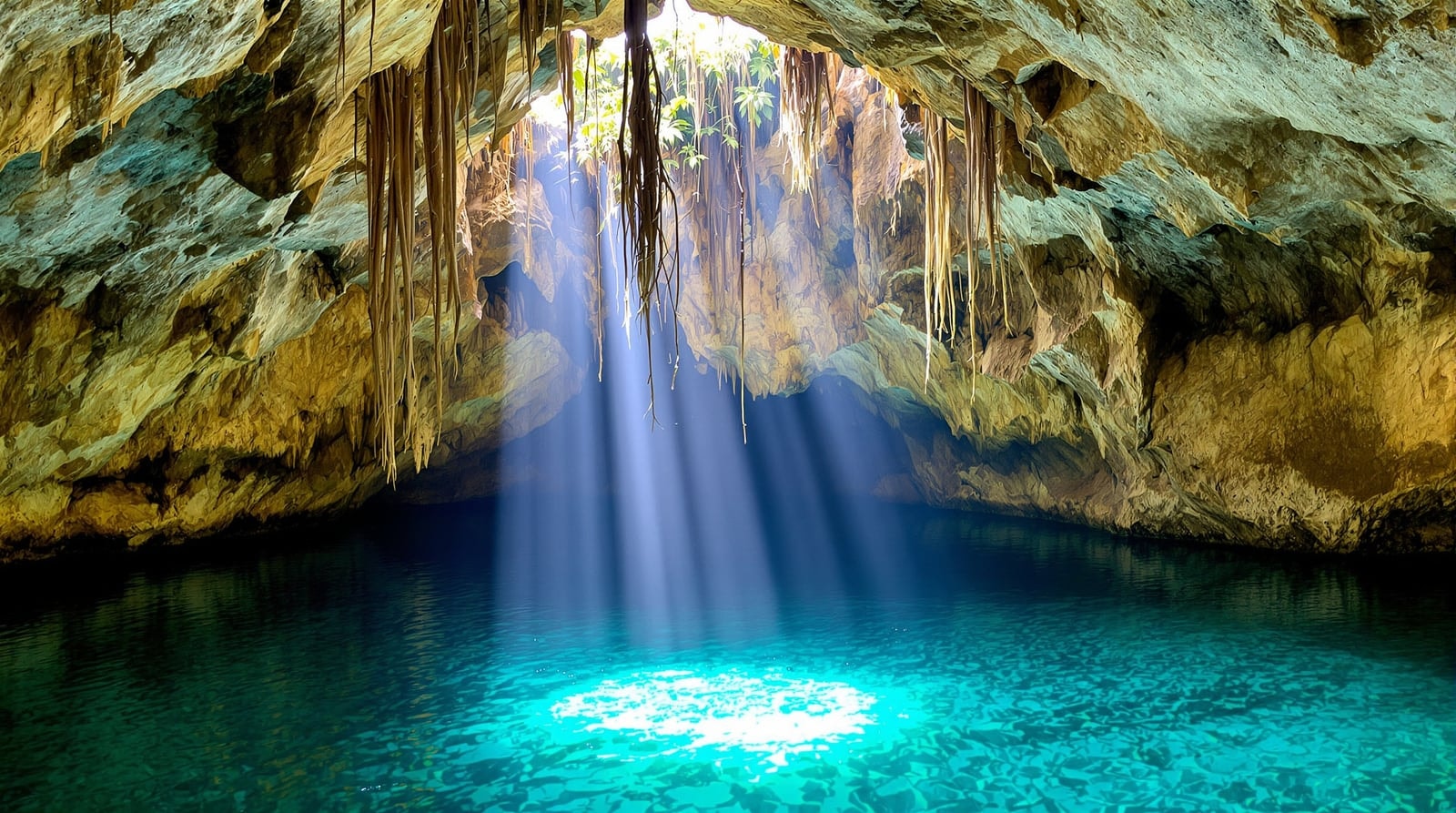
On the eastern edge of Mexico's Yucatán Peninsula, the land is flat and forested, the sea is a shade of blue that seems artificial, and the ground beneath your feet is honeycombed with water. The Riviera Maya is best known for beaches, but its deeper wonders are older: the ruins of Maya cities and the cenotes, natural wells of astonishingly clear water.
Where it is
Wikipedia's article on the Riviera Maya describes it as a tourism and resort district south of Cancún, stretching along the Caribbean coastline of the state of Quintana Roo in the eastern part of the Yucatán Peninsula. The name originally applied to the stretch of coast between Playa del Carmen and Tulum and has since widened. Offshore runs a long barrier reef, and inland lies low tropical forest.
The Maya world
This region is part of the Maya world, home to a civilization that built cities, observatories and temples across southern Mexico and Central America over many centuries, and to Maya people who live here today, speaking Maya languages and keeping many traditions. Along the coast and inland, the remains of ancient cities stand among the trees, some on cliffs above the sea. Visiting them early in the morning, before the heat and the crowds, lets you see the carved stone in soft light and hear the birds.
At any ancient site, follow the rules: stay on permitted paths, do not climb structures where it is forbidden, and never touch carvings or remove anything. The guide to Copán in Honduras covers another great Maya city.
Cenotes
Wikipedia's article on cenotes describes a cenote as a natural pit or sinkhole formed when limestone bedrock collapses and exposes groundwater. The article explains that the term comes from the Yucatán Peninsula, where the ancient Maya commonly used cenotes for water supplies and occasionally for sacrificial offerings, and that cenote water is often transparent because it comes from rain filtering slowly through the ground.
Some cenotes are open pools surrounded by jungle; others lie in caverns, lit by shafts of sunlight through holes in the ceiling, with roots hanging down to the water. Swimming in one is one of the unforgettable experiences of Mexico.
Swimming in cenotes respectfully
- Remember what they mean. Cenotes were sacred to the Maya and remain important to communities today. Many are on community or family land.
- Shower before entering where asked, and do not wear sunscreen, insect repellent or lotions in the water, which pollute these delicate systems.
- Follow the rules of each site, including where you may swim, whether life jackets are required and where you may enter the water.
- Do not touch formations in cave cenotes; stalactites and stalagmites form incredibly slowly.
- Leave nothing behind and take nothing away.
- Cave and cavern diving is a specialist activity that requires proper training and qualified guides. Never swim into underwater passages.
Cacao and chocolate
Long before chocolate became a sweet treat, cacao was a treasured ingredient in the Maya world, used in drinks and in ceremonial life. In the Yucatán today you can learn about cacao from the tree to the cup: how the pods grow, how the beans are fermented, roasted and ground, and how chocolate was traditionally prepared as a spiced drink. Look for small local producers and community-run demonstrations, where the story is told by people with a real connection to it.
Beaches and the reef
The coast's beaches of fine white sand face a warm sea protected by the reef. Snorkeling over the reef reveals corals, rays, turtles and brightly colored fish. The reef is fragile; do not stand on it, touch it or chase marine life. Currents can be strong, so follow local flags and advice.
Smaller eco-lodges
Beyond the large resorts, the region has many smaller places to stay: family-run guesthouses in towns, cabins near lagoons and forest, and eco-lodges that try to limit their impact through solar power, water conservation and local hiring. Staying in one can connect you more closely to the land and people. Ask how a place manages waste and water, and prefer those owned and staffed locally.
Planning in general
- Visit sites and cenotes early in the day.
- Carry water, a hat and light long-sleeved clothing for sun and insects.
- Rent a car or use local buses to reach inland areas at your own pace.
- Learn a few words of Spanish, and a Maya greeting if you can.
For Mexico's other coast, read Huatulco and the Pacific, and for sustainable habits on any trip, greener hotel stays and lighter travel.