Iceland's hot pools and geothermal landscapes
Steam in the lava fields, warm water in every town, and a whole culture built around bathing.
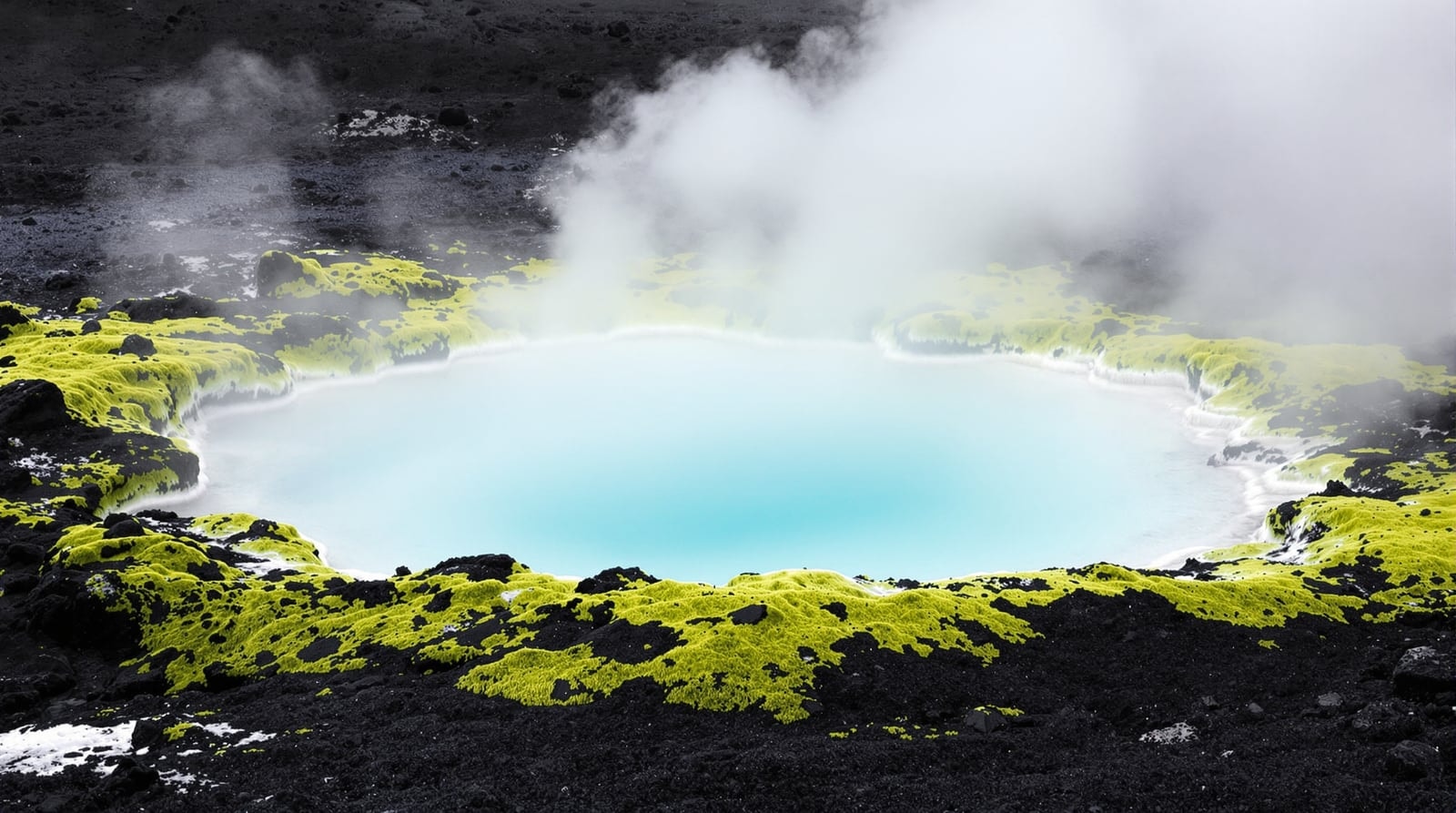
In Iceland the ground is warm. Steam drifts from fissures beside the road, mud pots bubble in grey valleys, and in nearly every town there is a public pool where people gather in hot water whatever the weather. To understand Iceland, you need to get into the water.
A land built on heat
Iceland straddles the Mid-Atlantic Ridge and sits over a volcanic hotspot. Wikipedia's article on geothermal power in Iceland describes the country's territory as some of the most geologically active on Earth, and notes that Icelanders have long used geothermal energy for direct uses such as heating homes and baths. The result is a country where hot water is part of daily life and the landscape itself steams.
Town swimming pools
The local pool is one of Iceland's great institutions. Most towns have one, usually outdoors, with a main pool for swimming and a row of hot tubs at different temperatures. People come early before work, after school, and in the dark evenings of winter, and the hot tubs are where neighbors catch up. For a visitor, an hour in a town pool is one of the most authentic and least expensive experiences on the island.
Pool etiquette
Icelandic pools keep chlorine low, so hygiene depends on bathers, and the rules are taken seriously:
- Shower thoroughly without a swimsuit before you put it on, washing well with soap. Changing rooms often have signs showing exactly which areas to wash.
- Leave shoes at the entrance to the changing room.
- Dry off in the shower area before walking back into the changing room.
- Keep voices low in the hot tubs and give others space.
Natural hot springs
Out in the countryside, natural hot springs range from simple stone-lined pools to warm rivers flowing through valleys. They can be wonderful, and they deserve caution. Water temperatures in geothermal areas can be scalding, and ground near hot springs can be thin crust over boiling water. Stay on marked paths, test water carefully, never let children wander in thermal areas, and respect any sign or rope. Some springs are on private land and have their own rules or small changing huts; leave them cleaner than you found them.
Iceland also has its famous commercial geothermal spas, including the country's best-known one with its milky-blue water in a lava field near the airport. They are popular and comfortable; the town pools and the countryside springs are quieter and closer to how Icelanders themselves bathe.
Waterfalls and glaciers
Heat and ice live side by side here. Glaciers cap the mountains and feed rivers that pour over basalt cliffs in some of the most dramatic waterfalls in Europe, some so close to the road that the spray reaches the car park, others at the end of long walks. Glacier tongues reach down into the lowlands, and lagoons in front of them fill with drifting icebergs. Walking on a glacier is a serious undertaking that requires experienced guides and proper equipment; admire them from safe viewpoints unless you are with a qualified guide.
The fjords and the far north
Away from the south coast, the fjords of the east and northwest are quieter still, with roads that wind in and out of long inlets beneath steep mountains. The north has its own character: a volcanic lake landscape, lava formations, geothermal fields, whale-watching towns and, in summer, a sun that barely sets. In winter, the dark skies of the north are a place to watch for the northern lights.
Reykjavík's street art
The capital is small, colorful and full of surprises. Many walls in the center carry large murals, and walking the side streets to find them is a lovely way to spend a gray afternoon. Add a visit to the harbor, a bowl of soup, and an evening in one of the city's pools, and Reykjavík makes a fine start or end to a trip.
Driving and weather
Iceland's weather changes quickly and can be severe, even in summer. Wind is the constant: it can rip a car door from your hand or push a vehicle across a gravel road. Check forecasts and road conditions every day, drive within your limits, never stop on the road itself to take a photograph, and be honest about whether a mountain road or a river crossing is within your experience. Plans should have room to change.
For Iceland's wildlife, from puffins to horses, see the animals of Iceland. And if hot water and dramatic landscapes appeal, the volcanoes of Costa Rica offer a tropical version of the same story.