Costa Rica's cloud forests, volcanoes and flowers
Mist in the treetops, smoke on the peaks, and color in every layer of the forest.
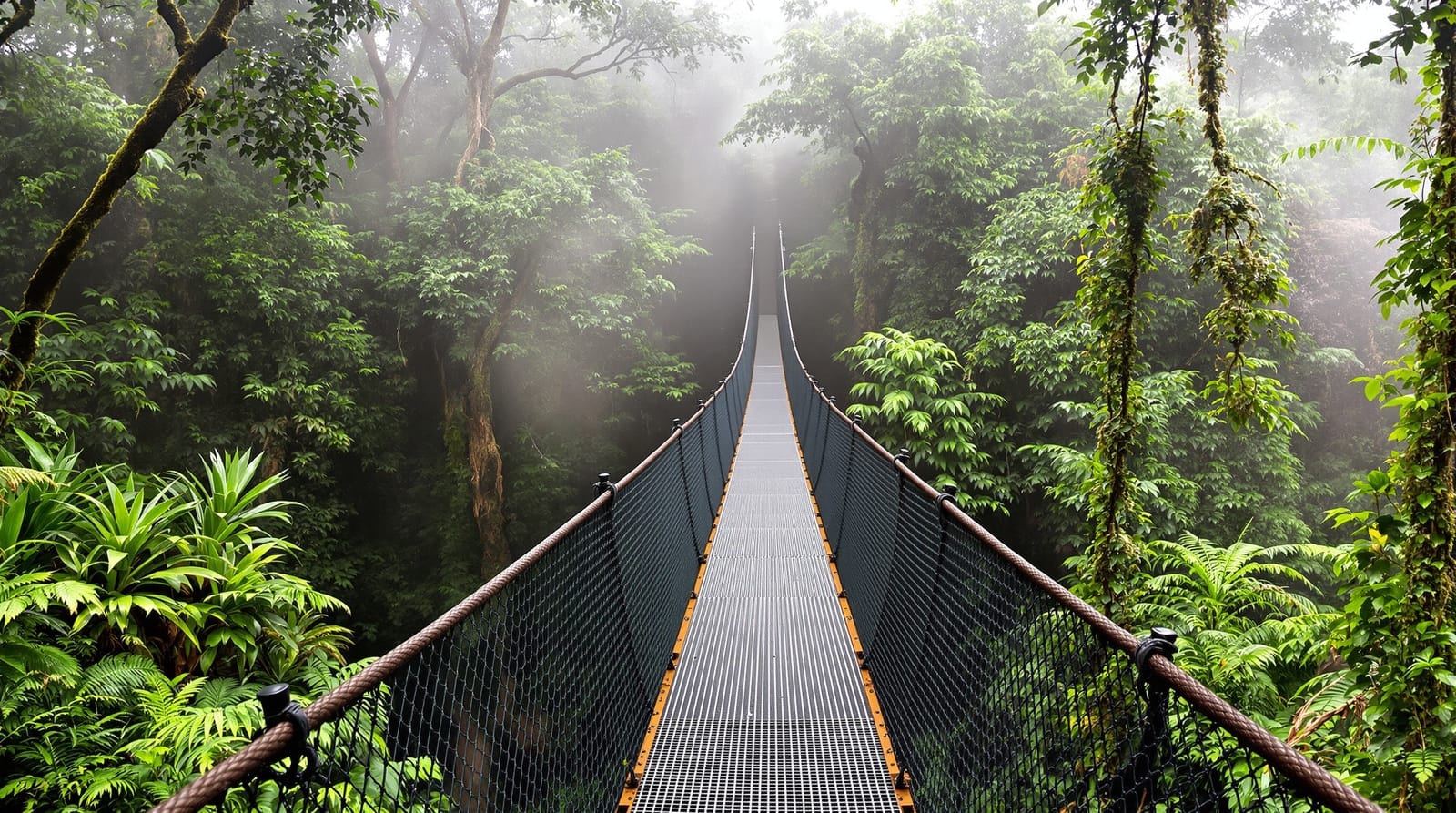
Costa Rica packs an astonishing variety of landscapes into a small country: two coastlines, rainforests, dry forests, volcanoes and high cloud forests where mist drifts through trees heavy with moss. It is a country for walkers, birdwatchers and anyone who loves green.
A country of protected nature
Wikipedia's article on Costa Rica covers the country's geography, including its mountain ranges and volcanoes, and its rich biodiversity and ecosystems. Much of the country is protected in national parks and reserves, and nature tourism is central to its economy. For visitors, that means a wide choice of parks, trails and reserves, each with its own character.
The cloud forest
A cloud forest is a mountain forest bathed almost constantly in cloud and mist. Moisture condenses on leaves and branches, feeding a dense growth of mosses, ferns, orchids and bromeliads that cover every surface. Wikipedia's article on the Monteverde Cloud Forest Reserve describes a reserve along the Cordillera de Tilarán that consists of over 10,500 hectares of cloud forest across six life zones, and calls it a high-biodiversity area. The same article describes the extraordinary biological richness of the cloud forests that drew scientists to study them.
Walking through it, you move through layers: the forest floor, dim and dripping; the understory of palms and tree ferns; and the canopy, where hanging bridges let you walk among treetops alive with birds. The hope of every visitor is a glimpse of the resplendent quetzal, with its long, iridescent green tail.
Night walks with a guide
After dark, the forest changes completely. On a guided night walk, torchlight reveals tree frogs, sleeping birds, stick insects, tarantulas, and sometimes a sloth or a kinkajou moving through the branches. A good local guide knows where to look and how to watch without disturbing anything. Never go into the forest at night without one, and never handle wildlife.
Arenal and the volcanoes
Costa Rica sits on the Pacific Ring of Fire, and its volcanoes shape the landscape. The cone of Arenal rises almost perfectly symmetrical above the plains and the lake beside it, often wrapped in cloud. Trails through old lava flows and forest lead to viewpoints of the peak, and volcanic heat feeds hot springs in the region. Other volcanoes have crater lakes, steaming vents and cloud forest on their flanks.
Volcanic areas can be dangerous. Follow park rules, stay on trails and at viewpoints, and never approach active vents or cross barriers.
Waterfalls and blue rivers
With so much rain and so many mountains, Costa Rica is full of waterfalls, from tall ribbons plunging into jungle pools to wide falls over volcanic rock. In some places, minerals in the water turn rivers and pools an astonishing sky-blue. Reaching them often means a walk on muddy, steep trails; wear shoes with grip, and swim only where it is permitted and safe.
Flowers
Everywhere, flowers add color: orchids by the hundred in the cloud forest, heliconias like red and yellow lobster claws, bright bromeliads in the treetops, and flowering trees along the roads. Hummingbirds dart between them. For more tropical color, see Jamaica's flowers and gardens.
Choosing a season
Costa Rica's climate varies more by region and altitude than by calendar, but broadly the country has a drier season and a greener, wetter one. The drier months bring easier roads and clearer mountain views, and they are also the busiest. The wetter months bring lush forests, full waterfalls, fewer visitors and afternoon downpours that often clear by evening. On the Caribbean side, the pattern can differ again. Whichever you choose, plan outdoor activities for the morning, when skies are most often clear, and keep afternoons flexible.
In the cloud forest, cloud and drizzle are part of the experience in any season. Accept them: the mist is what makes the forest what it is.
Renting a car
A rental car gives you freedom to explore at your own pace, especially between regions. Roads can be steep, winding, unpaved or affected by rain, and some destinations need a high-clearance vehicle. Drive in daylight, allow plenty of time, check the route and conditions with local advice, and never leave valuables visible in the car.
Packing for rain
Costa Rica is green because it rains, often heavily, especially in the wet season. Pack for it:
- a light waterproof jacket and a small umbrella;
- quick-drying clothes and a warm layer for the cool highlands;
- shoes with good grip, and sandals for rivers and beaches;
- dry bags or plastic bags for electronics;
- binoculars for birdwatching.
The general guide to packing smart covers the rest. For another Central American journey, read Copán and the Bay Islands, and for responsible choices on any trip, greener hotel stays.