Jamaica in color: flowers, gardens and the north coast
Blossoms on every roadside, mist on the Blue Mountains, and a coastline of coves and old stone houses.
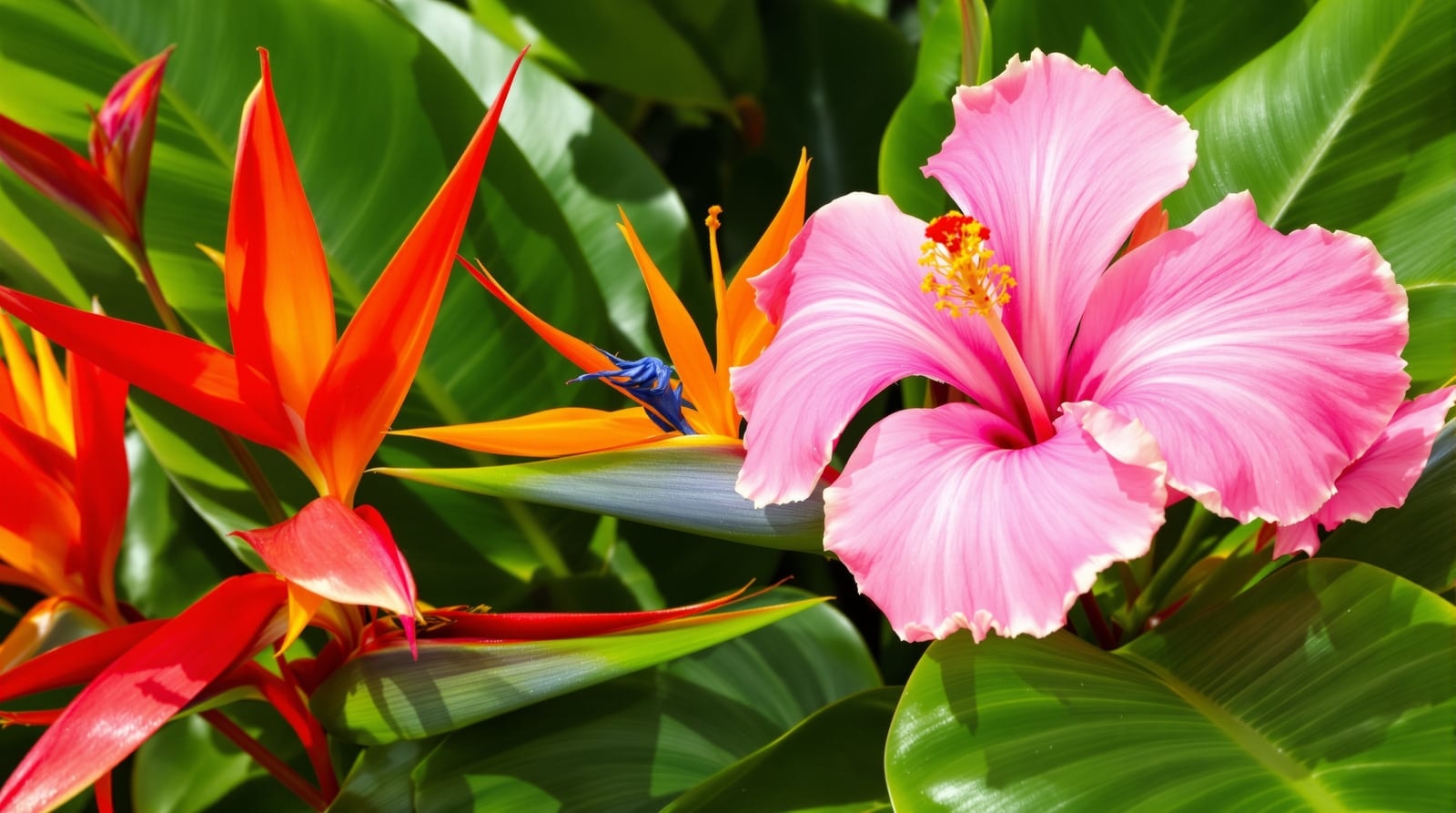
Jamaica is loud with color. Hibiscus and bougainvillea spill over garden walls, flame trees blaze along the roads, and the sea shifts from turquoise to deep navy within a few strokes. Behind the coast, green mountains rise into the clouds. Whatever else brings you to the island, the flowers will follow you home in your photographs.
The island
Wikipedia's article on Jamaica describes it as an island country in the Caribbean and the third-largest island in the Greater Antilles and the Caribbean, after Cuba and Hispaniola. Its interior is mountainous, with ranges running along the island and the Blue Mountains in the east containing Blue Mountain Peak, the country's tallest mountain. Rivers run down from the heights to a coast of bays, beaches and cliffs.
Tropical flowers everywhere
Jamaica's warm, wet climate lets an extraordinary range of plants flourish. Look for:
- Hibiscus, in reds, pinks, oranges and yellows, often planted as hedges.
- Bougainvillea, its papery bracts in magenta, purple, orange and white, draped over walls and fences.
- Heliconia, with its stacked, beak-like red and yellow bracts.
- Bird of paradise, the orange and blue flower shaped like a bird's head.
- Orchids, clinging to trees in the cooler, damper hills.
- Flowering trees such as the poinciana, whose crown turns scarlet in season.
Photographing flowers is a pleasure that costs nothing. Early morning light is softest, and flowers are often freshest after overnight rain. Get close, fill the frame, and watch for hummingbirds working the blossoms. Admire gardens from paths and never pick flowers from private or protected land.
Gardens
The island has botanical gardens, old estate gardens and small private gardens opened to visitors, where you can see flowering trees, palms, ferns and fruit trees labeled and cared for. They are cool, shady places to spend a hot afternoon, and a good introduction to the plants you will see everywhere else on the island. Check each garden's own information on visiting before you go.
The Blue Mountains
Rising behind the capital in the east, the Blue Mountains are a world apart from the beaches: cool, green and often wrapped in mist that gives them their name. Coffee grows on the steep slopes, small villages cling to ridges, and forest trails lead through ferns and wild orchids. Roads are narrow and winding, and weather can change quickly, so many visitors go with local drivers or guides who know the routes. Pack a warm layer; it can be surprisingly cold at height.
The north coast
The north coast, around Montego Bay and eastward along the shore, is where many visitors to Jamaica spend their time. Beyond the resort strips there are fishing villages, rivers that tumble down to the sea, limestone coves, and waterfalls in the forested hills. Traveling along the coast by road, you pass sugarcane fields, fruit stands and churches, and glimpse turquoise water between the trees.
In the water, the same reef courtesy applies here as elsewhere in the Caribbean: never stand on or touch coral, and let marine life be. The reasons are explained in the guide to St. John and island-hopping the Caribbean.
Great houses and their history
Scattered across the countryside are the old great houses of former plantation estates, stone and timber mansions set on hills with views to the sea. They are striking buildings, but they belong to a painful history. The same Wikipedia article records that, after the Indigenous people came under Spanish rule and many died, the Spanish brought large numbers of Africans to Jamaica as slaves. The plantation system that built these houses rested on that enslavement. Visiting them with that history in mind, rather than as backdrops for legends or entertainment, is the respectful way to see them.
Food in general
Jamaican food is bold and generous. Spiced grilled meats, stews rich with thyme and scotch bonnet pepper, fried dumplings, rice and peas cooked in coconut milk, and patties with flaky golden crusts are everywhere. Fruit stands sell mangoes, papayas, soursop and ackee in season. Roadside cooks and small family places are where the best meals are often found. Ask what is fresh, and try something new every day.
Tips for a colorful trip
- Travel slowly along the coast rather than staying in one enclosed resort.
- Carry a light rain layer; showers can be heavy but brief.
- Protect yourself from the sun, especially on boats and beaches.
- Hire licensed local guides for mountains, rivers and waterfalls.
For another island painted in bright colors, continue with the colors of Curaçao, and for flowers of a different forest, see Costa Rica's cloud forests, volcanoes and flowers.