Go back to one familiar place
Pick a place you can name without looking at a map. Piccadilly works as well as a famous building. Stand still for a moment and try to remember the weather, what drew your eye and the person you were walking with. It doesn't matter if the shop has gone or you remember the wrong corner. The difference gives the return visit a subject of its own.
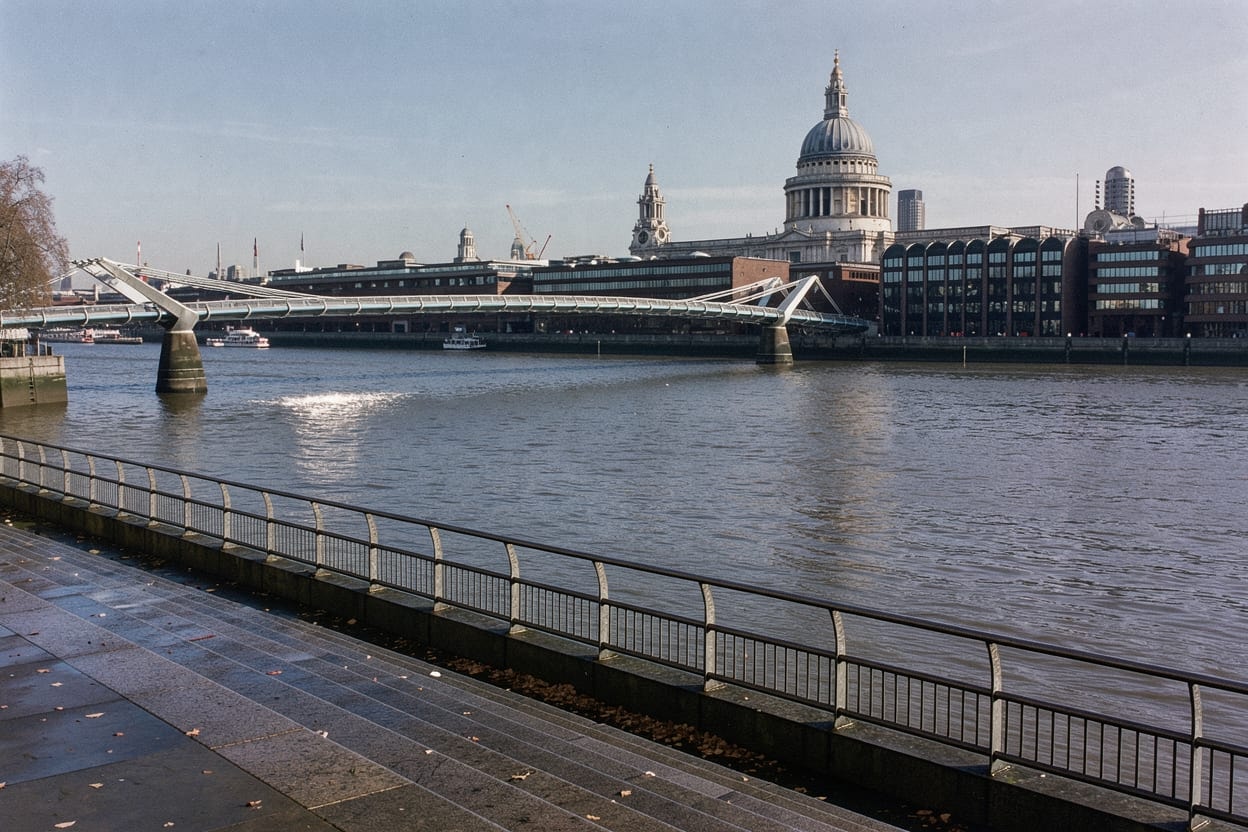
Then take a walk entirely new to you. London's Thames makes an excellent organizing line. Follow a stretch of one bank, cross a bridge and find the building you just passed from the opposite shore. A river view lets you place the dome, a cluster of offices or the sweep of a bridge in the same picture. London and the Thames
Give the second visit a different appetite
A first school trip may be full of big sights, the West End and the thrill of buying something impossible to find at home. Another visit can make room for afternoon tea, for Tate Modern and for seeing the river from the vicinity of the London Eye. Choose a sitting-down activity and a standing-up one. A gray London afternoon works quite well with either.
At a gallery, allow time for one room to hold you up. At tea, let an hour pass without checking what you can fit in next. If books are the reason for the journey, carry a few lines about a street and go to see how the writer's view fits the ground. An ordinary intersection can be a surprisingly good destination when you've already seen the headline sights.
A return anywhere
Leave one old appointment in the plan. In Dublin it might be a riverside crossing, in Venice the walk out of the station, in Lisbon a wall of tiles. Pair it with something your younger self would have walked straight past. A return gives you two sets of eyes and no obligation to agree with your earlier verdict.
On the way home, write down a detail from each visit without deciding which was better. When another chance to return appears, you'll have a starting place that belongs to you.